These references support the bird-identification logic used in this guide and are useful for cross-checking field marks.
The 4 Keys to Bird Identification (Official, Cornell Lab of Ornithology) - Foundational bird-ID framework centered on size and shape, color pattern, behavior, and habitat.
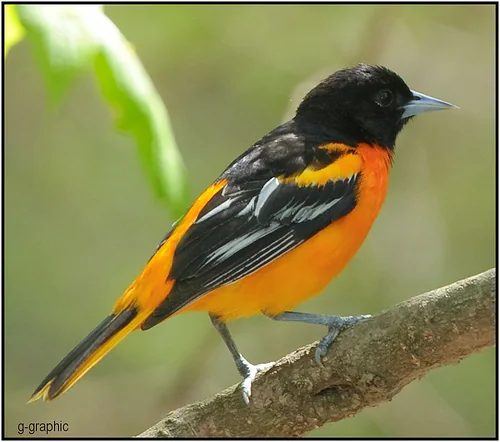
Baltimore Oriole Similar Species, All About Birds (Official, Cornell Lab of Ornithology) - Official Cornell Lab comparison page used for separating orioles from tanager lookalikes by bill, body shape, and wing pattern.
Orchard Oriole, All About Birds (Official, Cornell Lab of Ornithology) - Official Cornell Lab species guide used for field-mark, habitat, and behavior checks.
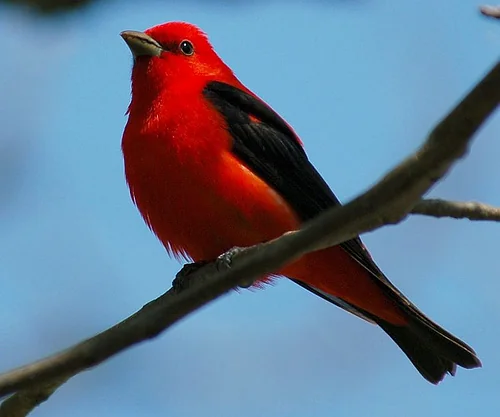
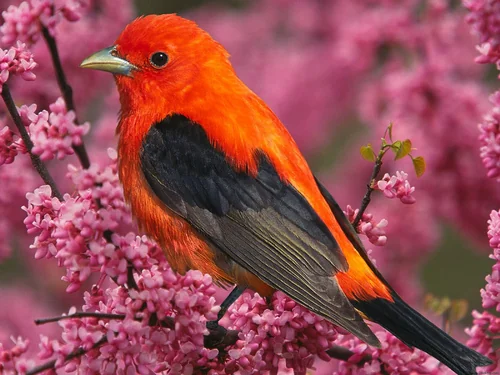
Scarlet Tanager Similar Species, All About Birds (Official, Cornell Lab of Ornithology) - Official Cornell Lab comparison page used for separating tanagers from bright orioles and other orange-red songbirds.
Summer Tanager, All About Birds (Official, Cornell Lab of Ornithology) - Official Cornell Lab species guide used for field-mark, habitat, and behavior checks.